If you notice your gutters overflowing during heavy rainstorms, observe that a substantial portion of your roof directs water into a single downpipe, or are considering the installation of a new metal roof while your existing gutters are in poor condition, it is likely that you need larger gutters. The National Construction Code of Australia specifies how eaves gutters should be sized, factoring in local rainfall patterns and the roof area served by each downpipe.
This detailed guide from AWS Roofing explains how to determine the correct gutter size for your Central Coast home. It covers the advantages of upgrading to larger gutters and adding downpipes, as well as guidance on when it is necessary to replace your gutters rather than simply patching them.
Key Insights
- Gutter sizing must comply with the 5-minute rainfall intensity for your area, as outlined in the ABCB Housing Provisions, Part 7.4, which considers a 5% annual exceedance probability.
- Part 7.4 does not specifically list any towns within the Central Coast; the nearest referenced locations are Newcastle at 225 mm/h and Avalon, Sydney, at 210 mm/h.
- Each downpipe should manage no more than 12 metres of gutter length.
- Signs such as rust, sagging, or overflow indicate that it is time to replace your gutters.
What Are the Advantages of Larger Gutters and Additional Downpipes?
Upgrading to larger gutters and incorporating extra downpipes significantly improves your roof’s drainage capacity, enabling it to handle greater volumes of rainwater without overflowing. The sizing of gutters is primarily determined by two factors: the intensity of design rainfall and the area of the roof draining into each downpipe.
- Enhanced Water Capacity: A broader gutter profile can accommodate more water, minimising the risk of spillage over the front edge.
- Optimised Roof Area per Downpipe: More downpipes allow each one to service a smaller section of the roof, improving overall efficiency.
- Effective Water Diversion: Appropriately sized gutters with overflow provisions ensure that water is directed away from your home’s walls and fascia, helping to prevent potential damage.
How Can You Assess the Need for Larger Gutters?
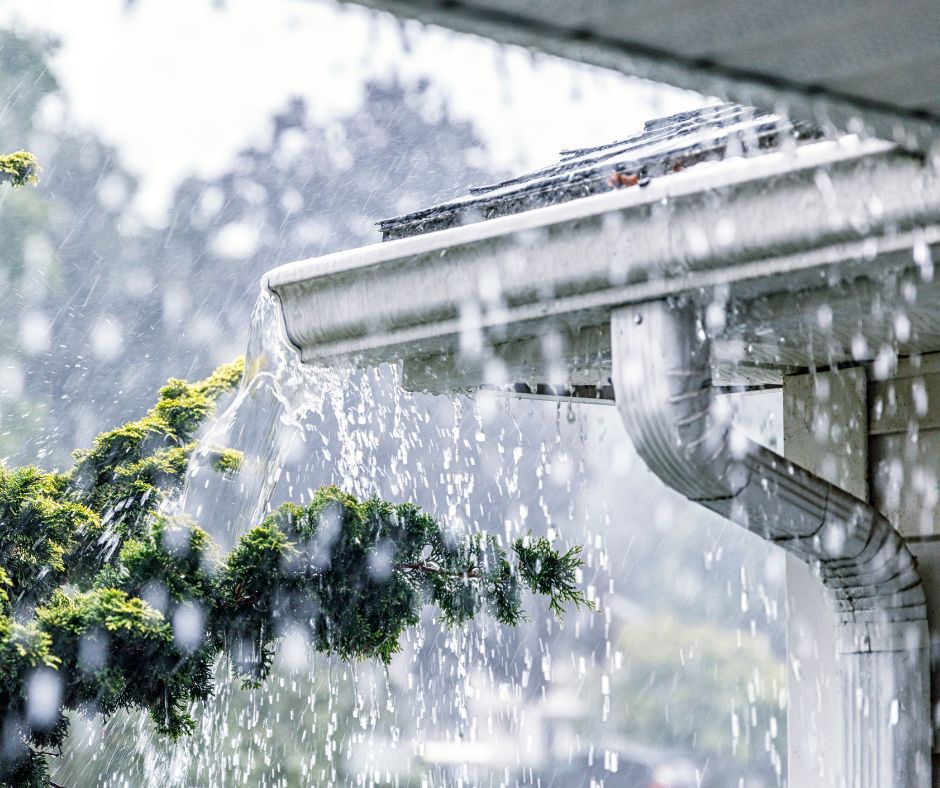
Start by monitoring your gutters during heavy rainfall. If water spills over the front edge, cascades down the walls, or collects around the foundation, it suggests that your gutters or downpipes are insufficient. Next, evaluate your roof’s layout. A long roofline or a large area draining into a single downpipe will channel more water into that gutter than a smaller, well-serviced section.
If you are contemplating a new roof installation, this is an ideal opportunity to assess your gutters. For further information, refer to our guide on larger gutters and gutter replacement for heavy rain.
What Factors Influence Gutter Sizing for Homes on the Central Coast?
Gutter sizing is determined by the local 5-minute rainfall intensity and the roof catchment area associated with each downpipe. According to the ABCB Housing Provisions, Part 7.4 Gutters and Downpipes (NCC 2022), eaves gutters must be capable of handling rainfall at the intensity specified in Table 7.4.3d for a 5% annual exceedance probability. Overflow provisions are designed for a 1% annual exceedance probability. The NCC 2022 edition remains applicable in NSW until NCC 2025 takes effect on 1 May 2027. The Part 7.4 values in this guide are relevant for both editions.
Table 7.4.3d does not reference any towns in the Central Coast; the nearest areas mentioned are Newcastle to the north at 225 mm/h for a 5% annual exceedance probability and 316 mm/h for 1%, and Avalon, Sydney, to the south at 210 mm/h and 287 mm/h. Table 7.4.3a correlates gutter sizes with the respective rainfall intensity and the area of the roof draining into each downpipe.
This section of the Housing Provisions also details proper installation methods for eaves gutters:
- Fall Requirement: At least 1:500.
- Bracket Placement: Fixed at stop ends and corners, with a maximum spacing of 1.2 metres apart.
- Overflow Measures: These must redirect water away from the building, preventing ponding, entry, or damage, even in the event of a blocked stormwater system.
Box gutters are addressed separately, with the Housing Provisions permitting the use of AS/NZS 3500.3 to determine their minimum sizes, falls, and overflow measures. For further details, consult our guide to types of guttering, including fascia and box gutters.
How Do Roof Size, Downpipes, and Larger Gutters Affect Drainage?
The size of your roof is pivotal, as gutter sizing is contingent on the area of the roof served by each downpipe. The Housing Provisions stipulate that a downpipe should not be responsible for more than 12 metres of gutter length and should be positioned as close as possible to valley gutters. Inadequate or poorly placed downpipes often result in drainage issues.
For properties with extensive rooflines or multiple levels, adding more downpipes or enlarging their size improves water management, ensuring that excess volume flows into the stormwater system rather than accumulating in the gutter.
What Strategies Can You Use to Manage Leaf Litter, Gutter Guards, and Blockages?
Leaf litter poses significant challenges; even well-sized gutters will fail to function effectively if blocked. The Housing Provisions indicate that eaves gutters are designed to remove water from a 5% annual exceedance probability rainfall event, provided they remain unobstructed. If your home is surrounded by large trees, such as gum trees, check your gutters after heavy leaf fall.
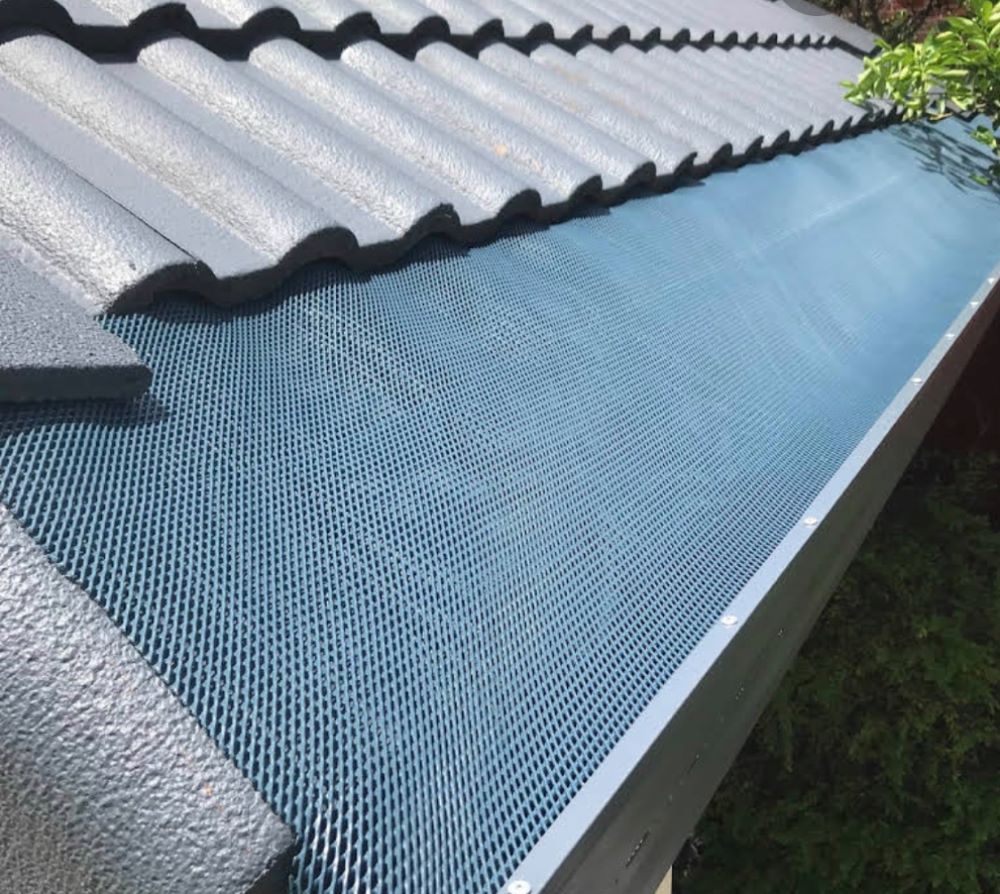
Accumulations of leaf litter and stagnant water can accelerate rust formation. For homes experiencing substantial leaf fall, larger gutters equipped with gutter guards will assist in maintaining proper water flow. Gutter guards can be installed when we replace your gutters. Our guide on the damage caused by blocked gutters outlines the consequences of inadequate drainage.
When Is It Time to Replace Your Gutters Instead of Just Repairing Them?
If your gutters are rusted beyond repair, it is time for a replacement. Coastal salt can corrode metal, and once gutters start to leak at the joints or sag between brackets, patch repairs often fail within a season. This is typically the moment when installing new gutters, customised to your roof’s specifications, becomes a more sensible option than yet another round of temporary fixes.
Consider replacing your gutters if you notice:
- Rust or Holes: Water seeps through, even if the gutter appears intact.
- Sagging or Gaps: The gutter has detached from the fascia and is no longer positioned at the appropriate fall.
- Overflow During Heavy Rain: Water spills over the back of the gutter and runs down the walls.
- Signs of Water Damage Inside: Stained ceilings or fascia rot near the roofline.
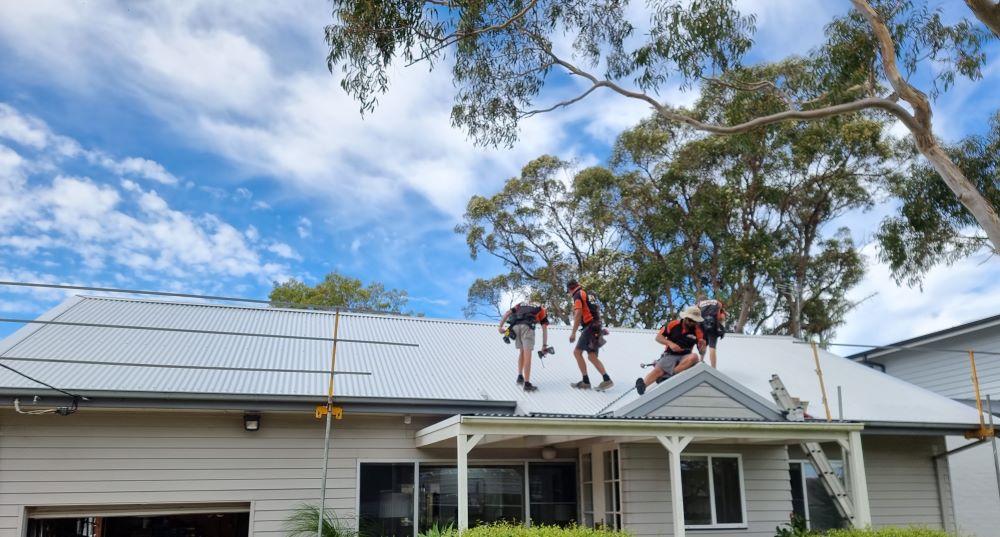
When you opt to replace your gutters through AWS Roofing on the Central Coast, we manage the removal and disposal of your old gutters, install new Colorbond gutters with the correct fall, and provide fresh brackets and fixings rather than reusing old components. We also inspect your downpipes and fascia to ensure adequate water drainage. If you are replacing your gutters, now is an excellent opportunity to upgrade to a larger profile.
Are Larger Gutters More Effective at Managing Water Flow?
Larger gutters indeed perform better when your existing gutters cannot accommodate the water volume from your roof during heavy rain. It is crucial that the gutters maintain the correct fall, include adequate downpipes in optimal locations, feature overflow measures, and permit unobstructed water flow, as specified in Part 7.4 of the Housing Provisions.
Is It Possible to Upgrade My Gutters for Enhanced Water Flow Management?
Absolutely. You can upgrade to a larger gutter profile, add downpipes, or implement both strategies. Our guttering page features profiles like the 115 mm Ace Quad and the 150 mm Half Round, both of which ACE states provide greater water capacity than traditional gutters. We customise the profile and colour to match your roof and fascia.
How Can You Reach AWS Roofing for New Gutters for Your Home?
AWS Roofing is fully licensed and insured, WorkCover accredited, and offers written warranties for our work. We will assess your roof to provide an accurate quote and explain the recommended gutter sizes and downpipes suitable for your home. Contact us for a free, no-obligation quote or visit our Charmhaven showroom to explore the Colourbond colour options in person.
Original Article First Published At: Do I Need Larger Gutters for My Central Coast Home? A Gutter Sizing Guide from AWS Roofing
The Article: Larger Gutters for Your Central Coast Home: A Sizing Guide first appeared on https://writebuff.com
The post Larger Gutters Sizing Guide for Your Central Coast Home appeared first on Limits Of Strategy.
The Article Larger Gutters Sizing Guide for Central Coast Homes found first on https://electroquench.com