Shower floors are prone to leaks, often arising from problems with the grout and the silicone seal at the junction where the floor meets the walls. By regrouting and resealing your shower floor, you can effectively remedy the leak without the necessity of removing the tiles. If the grout on the walls remains intact, no further work is needed on them. if the leak stems from a faulty pipe, waste line, or a compromised membrane beneath the tiles, it is crucial to identify the source of the leak prior to commencing any repairs.
This detailed guide is designed to assist you in diagnosing the issue and provides comprehensive instructions on the process of regrouting and resealing your shower floor.
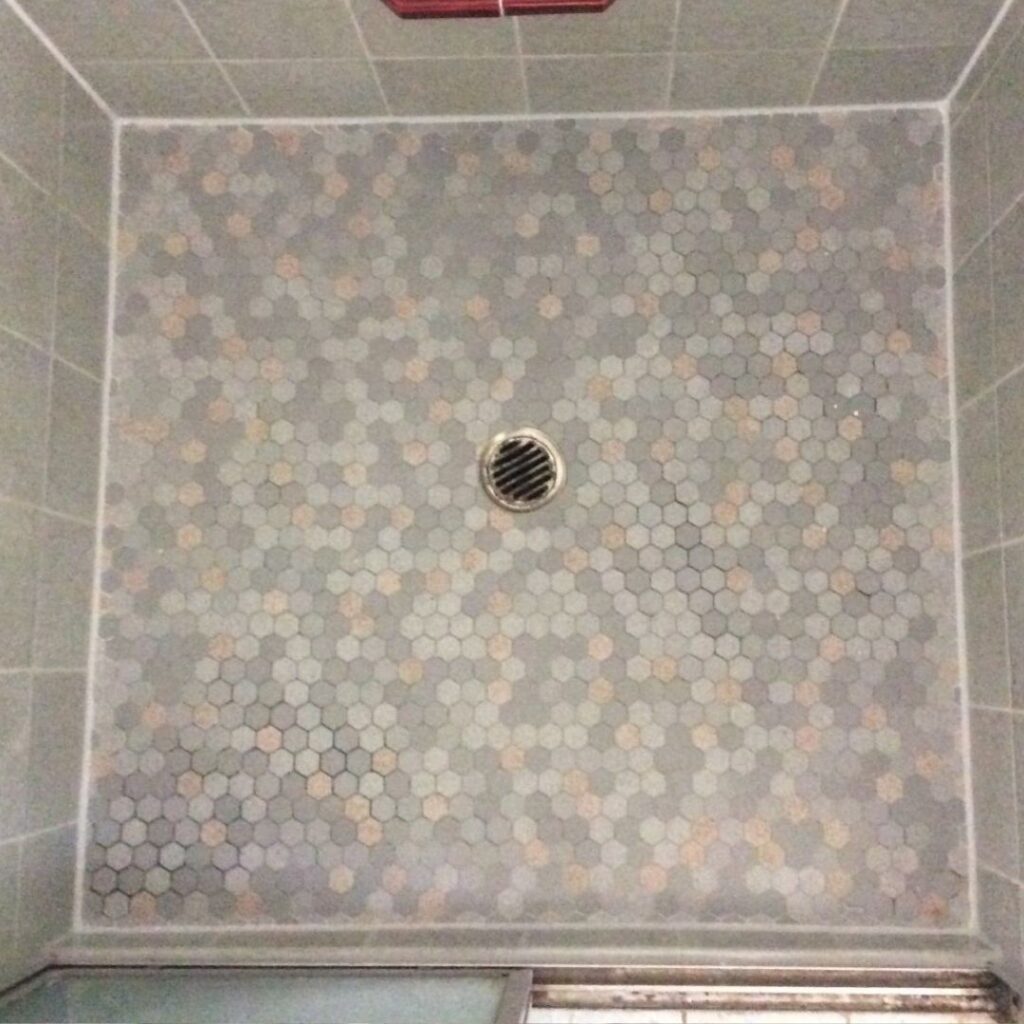
What Are the Main Causes of Leaks in Shower Floors? Understanding Grout and Silicone Failures
Each time you use the shower, water flows over the floor, collecting in the grout lines before draining away. Over time, constant foot traffic and regular cleaning can lead to the deterioration of the grout. Grout, being naturally porous, can absorb water, which retains moisture between showers.
The area most susceptible to leaks is usually where the wall meets the floor. This junction is frequently exposed to water and movement as the building settles, which can cause cracking, shrinking, or detachment of the silicone seal from the tile. When this seal fails, water may leak behind the bottom row of wall tiles, leading to significant water damage.
How Can You Spot Signs of a Leaking Shower Floor?
Watch out for these indicators that suggest grout and silicone failures on your shower floor:
- Persistent dark grout: If the grout remains damp and dark long after the shower has dried, this is a definitive sign of leakage.
- Cracked or crumbling grout: Gaps or grout that crumbles upon touch indicate a problem. Small holes in the grout can serve as early warning signs.
- Mouldy or lifting silicone: If the silicone at the junction of the wall and floor appears discoloured, shrunk, or is peeling away, it requires repair.
- Dampness outside the shower: Look for swollen or stained skirting boards, soft door frames, or water pooling on the bathroom floor after use.
- Musty odour: A damp smell returning shortly after cleaning suggests moisture issues.
- Loose tiles: If one or two tiles feel loose while the rest of the floor is stable, they can often be reset during the regrouting process.
If several of these signs resonate with your situation, further information can be found in our article on detecting shower leaks.
Can You Regrout Only the Shower Floor?
Certainly. If the wall grout is in satisfactory condition, we can concentrate solely on regrouting and resealing the shower floor. This process, often referred to as a shower base seal, specifically targets the floor grout, the junction between the wall and floor, and the perimeter of the shower, often effectively resolving the leak.
If the wall grout has also deteriorated, a more extensive shower sealing may be required. This comprehensive process addresses all grout lines on the walls, internal corners, junctions, and tap flanges. Our article on regrouting showers to fix leaks offers an in-depth overview of this procedure.
In instances where the floor grout is intact but the silicone has failed, resealing the joints may suffice. We can determine the necessary repairs after inspecting the shower or reviewing photographs.
Step-by-Step Guide for Regrouting and Resealing Your Shower Floor
A shower base seal is performed without removing the floor tiles. Here’s a comprehensive step-by-step guide:
- Removing old grout: We extract the existing grout from the shower floor, the junction between the wall and floor, and the perimeter, reaching the edges of the tiles.
- Eliminating old silicone: All old silicone is removed, as new silicone requires a clean surface for optimal adhesion.
- Cleaning the joints: The empty joints and tiles are thoroughly scrubbed to ensure a clean bonding surface for the new grout and silicone.
- Regrouting with epoxy grout: The shower floor is regrouted using Ardex EG15 epoxy grout, renowned for its exceptional durability.
- Resealing junctions: The junction between the wall and floor and the perimeter are resealed with Ardex ST neutral cure silicone, ensuring a watertight finish.
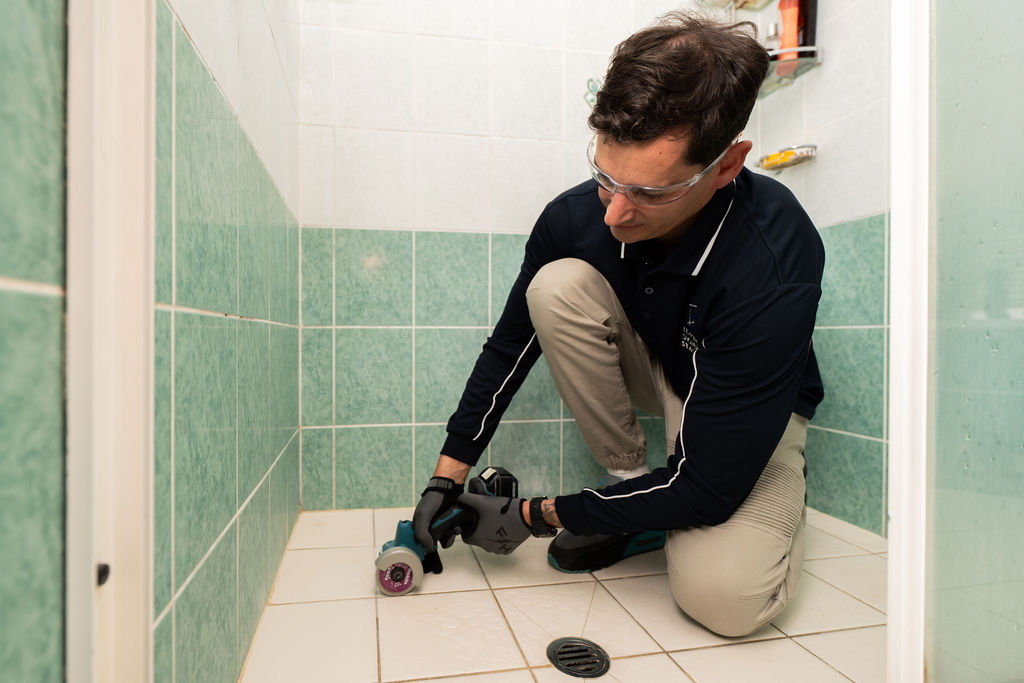
Maintaining sealed floor grout and silicone also safeguards the membrane beneath the tiles. If the surface seal fails, water can accumulate in the tile bed, jeopardising the membrane. A properly sealed floor allows the membrane to manage only the moisture it was designed to handle.
When Should You Consider Repairs Beyond Regrouting Your Shower Floor?
Certain leaks bypass the grout and silicone, indicating that a simple regrouting will not resolve the issue.
How Can You Identify Leaks from Pipes, Waste Lines, or Taps?
The timing of damp patches can provide valuable insights. If no one has used the shower for several days and dampness continues to spread, this likely indicates a leak from a pipe within the wall. Conversely, leaks from the waste pipe typically appear only after the shower has been used, as water flows down the drain. We closely collaborate with plumbers to address any damage to pipes, shower drains, or taps, allowing us to proceed with regrouting and resealing the floor once plumbing repairs are completed.
What Are the Consequences of a Compromised Shower Floor Membrane?
Typically, a waterproof membrane lies beneath the floor tiles to capture any water that penetrates the surface. If the grout and silicone have been correctly replaced yet dampness persists, the membrane may be compromised. A stain on the ceiling below an upstairs bathroom that does not dry out between showers may also indicate membrane failure. Repairing a membrane requires lifting the tiles, necessitating the expertise of a licensed waterproofer and tiler.
How to Evaluate Drummy Floor Tiles Over a Large Area
Tap the floor tiles to check for a hollow sound. If a significant area sounds hollow or if the tiles shift underfoot, this may suggest a breakdown of the substrate beneath. In some cases, re-fixing and sealing the tiles may be appropriate; in others, it may indicate a need for renovation, which we will advise on before any work commences.
Why Is Epoxy Grout the Best Choice for Shower Floors?
Standard cement grout is porous and absorbs water during showering, leading to darkening, mould growth, and eventual degradation. In contrast, epoxy grout is non-porous, effectively preventing the same level of water absorption.
While bleach and mould sprays can clean the surface, they fail to eliminate mould trapped within the grout due to retained moisture. Replacing mouldy grout with epoxy grout eradicates the damp conditions that allow mould to thrive.
Key Factors Affecting the Time and Cost of Shower Floor Regrouting
Several elements can influence the duration and cost of regrouting a shower floor:
- Tile size: Smaller mosaics and 100mm tiles contain significantly more grout lines compared to larger 300mm or 600mm tiles, resulting in longer grinding and regrouting times.
- Shower configuration: Features such as double showers, niches, or additional corners and junctions increase the complexity of the job.
- Condition of grout: Heavy mould, silicone applied over existing silicone, or previous repairs requiring complete removal can prolong the process.
- Loose or drummy tiles: Any tiles that require re-fixing before sealing the floor will increase the workload.
To receive an initial quote, please send us photographs of your shower floor, walls, and the entire shower area. If the membrane is sound and the leak originates from the floor grout and silicone, regrouting and resealing can restore the shower’s watertight integrity, providing you with more time to save for a renovation. Our article on whether regrouting a shower is a budget-friendly renovation explores this option in more detail.
Enhancing Property Value: The Advantages of Regrouting Shower Floors for Sales or Tenant Transitions
For real estate agents preparing a home for sale, regrouting and resealing the shower floor, in conjunction with a thorough cleaning of tiles and grout, significantly enhances the bathroom’s appeal. Since the old grout and silicone are completely replaced, the shower will meet the standards of any buyer’s inspector.
Landlords or property managers should consider utilising the time between tenants for a partial bathroom refresh. Our information page for real estate professionals offers additional insights.
Common Questions Regarding Shower Floor Regrouting
What is the typical duration for regrouting a shower floor?
Regrouting and resealing just the floor, known as a shower base seal, usually takes around 3 to 4 hours on-site. Including the walls extends the time to approximately 4 to 5 hours.
How long should you wait before using the shower after regrouting?
You should wait 24 hours before using the shower, allowing the epoxy grout and silicone ample time to cure.
Is it necessary to remove the floor tiles to regrout a shower floor?
No, the regrouting and resealing process can be completed with the tiles remaining in place. If a couple of tiles are loose, they can often be reset and regrouted during the same visit.
What warranty is included with a shower floor regrout?
Our regrouting services come with a 10-year warranty on Ardex products and a 7-year workmanship warranty from Leaking Showers Sealed. This warranty will be detailed in your quote after we assess the shower and confirm it can be sealed effectively.
Request Your Free Quote for a Leaking Shower Floor Today
If your shower floor is leaking, with dark grout or discoloured silicone at the wall base, please email photographs of the floor, walls, and the entire shower to sales@leakingshowerssealed.com.au. You can also contact us at 1300 815 512 or reach out to schedule a free quote. Share your observations, and we’ll clarify whether a regrout and reseal is the appropriate solution for your shower floor.
Leaking Showers Sealed has been regrouting and resealing showers across Sydney since 2016. Andreas, the business owner, holds NSW contractor licence 89111C, which can be verified on the NSW Fair Trading public register. We are Ardex Academy accredited and have received over 300 Google reviews across our three locations.
Original Article First Published At: Leaking Shower Floor? When Regrouting and Resealing the Shower Floor Fixes It
The Article: Leaking Shower Floor Solutions: Regrouting and Resealing Tips first appeared on https://writebuff.com
The post Leaking Shower Floor Solutions: Tips for Regrouting and Resealing appeared first on Limits Of Strategy.
The Article Leaking Shower Floor Solutions: Regrouting and Resealing Tips found first on https://electroquench.com